
Here's the direct answer: if you see brown ceiling stains, soft spots underfoot on the roof, or cracked sealant around vents and seams, your roof is already leaking - and the water damage below is growing every time it rains. Roof problems never fix themselves, and they never get cheaper.
I rebuild RV roofs at our shop in Roscoe, SD, and by the time most rigs get to me, the leak has been working for a year or more. Here's what to look for so yours doesn't get that far.
1. Brown stains or bubbling on the ceiling
The classic sign. Water finds the lowest path, so a stain near a wall might come from a leak six feet away on the roof. Any discoloration inside means water is already through.
2. Soft spots when you walk the roof
A healthy roof feels solid. If a section flexes or feels spongy underfoot, the wood decking underneath is wet or rotted. That's structural - don't wait on it.
3. Cracked, lifted, or crumbling sealant
Get up there (carefully) twice a year and look at every seam, vent, skylight, and antenna mount. Factory lap sealant dries out, cracks, and pulls away. Every crack is an open door for water.
4. A rubber roof that's chalking or wrinkled
Rub your hand on an EPDM rubber roof - a white chalky residue means the membrane is breaking down. Wrinkles, bubbles, or tears mean water may already be underneath the membrane.
5. Musty smell inside
If the camper smells like a wet basement, moisture is trapped in the walls or ceiling. Mold follows.
6. Delamination on the sidewalls
Bubbles or waves in fiberglass sidewalls often trace back to a roof-edge leak running down inside the wall. (More on that in our delamination post.)
7. Interior trim pulling loose or screws backing out
Wet wood doesn't hold fasteners. Sagging ceiling panels and loose trim around the ceiling line are late-stage warnings.
What to do if you spot any of these
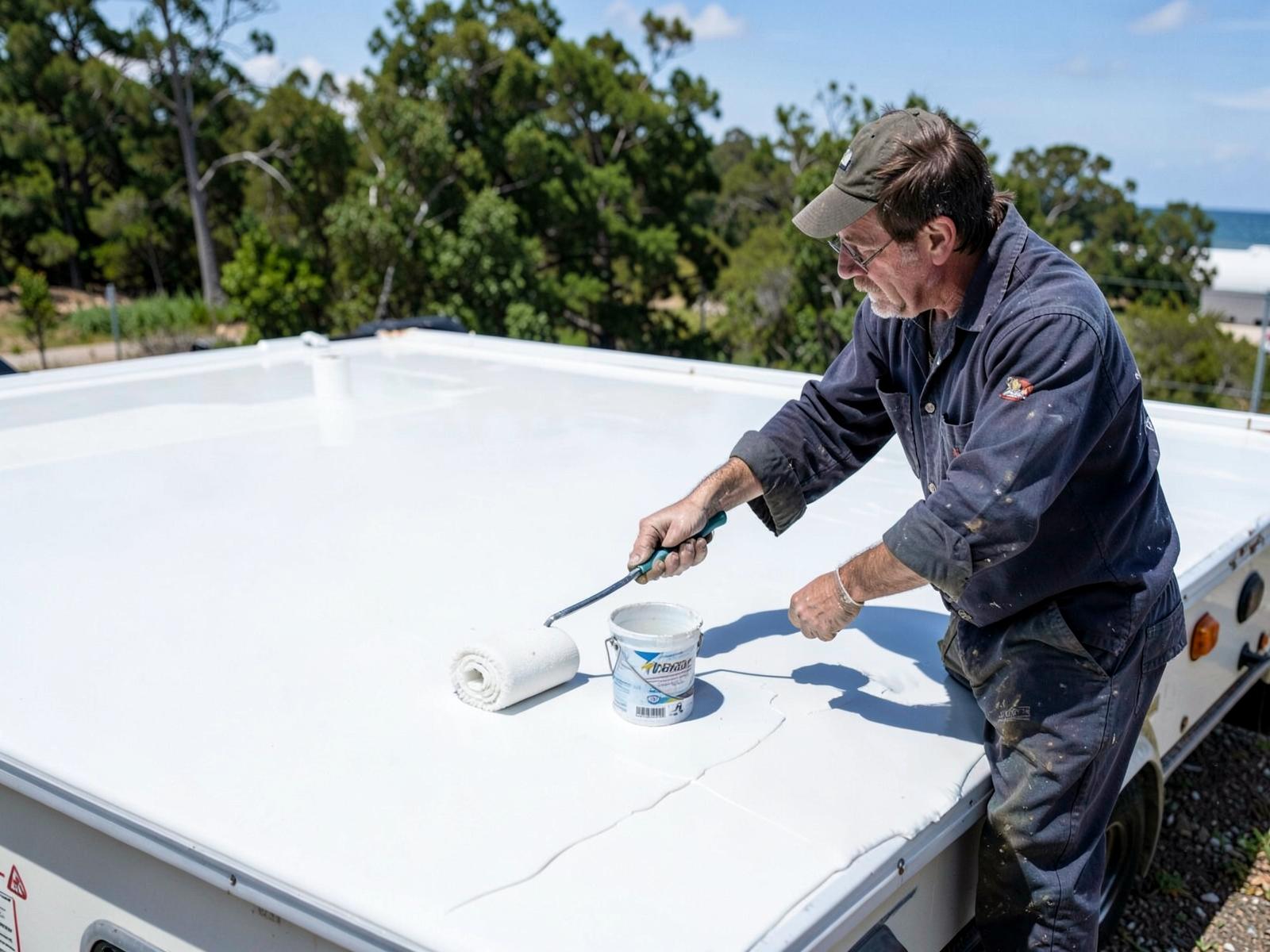
Stop the water first, assess second. Sometimes it's a reseal job. Sometimes the decking is gone and the honest answer is a rebuild. We do complete roof rebuilds at our Roscoe shop - tear-off, new decking, and for a lot of customers we finish with the Crazy Seal seamless silicone system so it's sealed once, permanently. Either way, you'll get a straight answer about which one you actually need.
RV roof FAQ
How often should I inspect my RV roof? Twice a year minimum - spring and fall - plus after any hail storm. In South Dakota, hail checks are not optional.
Can I just caulk over the cracks? As a stopgap, yes, with compatible sealant. But caulk over failing caulk is a Band-Aid, not a fix.
How long does a roof rebuild take? Depends on how far the rot went. Bring it in or send photos and we'll give you a realistic timeline.