
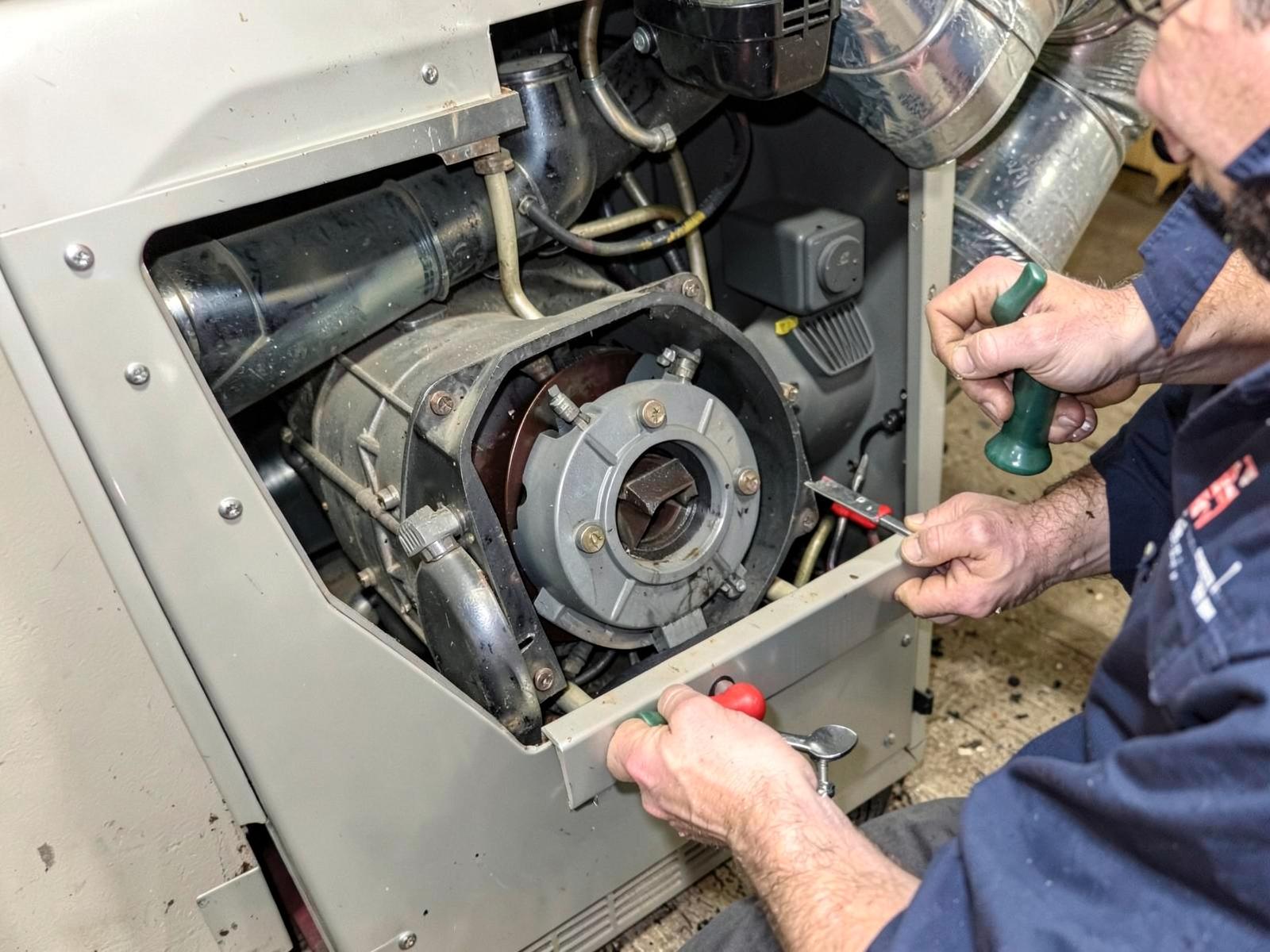
Nine times out of ten, an RV furnace that won't light comes down to one of six things: low battery voltage, an empty or airlocked propane system, a tripped breaker or fuse, a dirty sail switch, a blocked exhaust, or a failing igniter. Here's how to check the safe ones yourself - and where to stop and call us.
Out here, a dead furnace isn't an inconvenience, it's the end of your hunting trip. This is one of our most common fall service calls across the Roscoe-Aberdeen area, so let's walk through it.
1. Check your battery voltage first
RV furnaces are propane-fired but electrically controlled. Below roughly 10.5-11 volts, the blower may run weakly or the board won't allow ignition. If your furnace blows but never lights, check the battery before anything else - especially on shore-power-free hunting weekends.
2. Confirm you actually have propane flow
Fresh tank? The lines may be full of air. Light a stove burner and let it run a minute to purge the lines, then try the furnace again. Also check that the tank valve is fully open - opening it too fast can trip the excess-flow safety and choke the supply.
3. Look at fuses and breakers
Check the furnace fuse at the 12V panel. A blown fuse can mean a simple fix - or a motor drawing too many amps. If a new fuse blows immediately, stop. That's a call-us situation.
4. Listen to the sequence
A healthy start: thermostat clicks → blower runs 15-30 seconds → tick-tick-tick of the igniter → whoomp of ignition. Where the sequence stops tells us a lot. Blower runs but no ticking often means a sail switch problem - the little paddle that proves airflow can stick from dust, cottonwood fluff, or a mouse nest. Ticking but no whoomp points at gas supply or igniter.
5. Check the outside exhaust and intake
Wasps and mice love furnace vents. A blocked intake or exhaust will stop ignition - and a partially blocked one is dangerous. Look for nests, but leave disassembly to a tech.
6. Know where to stop
Here's my honest line, as a guy who fixes these for a living: anything past the checks above - gas valves, control boards, burner assemblies, anything that means opening the furnace - is not a YouTube job. Propane appliances that half-work can produce carbon monoxide. Every camper should have a working CO detector, full stop.
We fix furnaces where your camper sits
Furnace work is usually a great mobile call - we come to your storage shed or campsite anywhere within about 100 miles of Roscoe. Better yet, have us check the furnace during your fall winterization visit so it's one trip.
RV furnace FAQ
Why does my furnace start then shut off after a few seconds? Usually the flame sensor isn't proving flame, or airflow is inadequate. Both are quick diagnoses for us.
Furnace runs but the camper won't warm up? Could be a duct issue, an undersized battery limping the blower, or a furnace cycling on limit. Worth a look before deep winter.
Should I run the furnace during storage? No - but do have it tested before storage so it's ready in spring.